The Functional Skills for Kids series written by occupational and physical therapy bloggers on developing 12 functional skills
for children continues today with the topic of toilet training. Each month throughout 2016, we will discuss
the development of one functional skill in children addressing the many
components of that skill. The ability to
complete the functional task of toilet training requires the biological
ability/awareness to void in addition to fine motor skills, sensory processing
skills and gross motor skills. First and foremost, success with toilet training
requires that the child is physically and emotionally ready, not a specific
age.
GROSS MOTOR SKILLS AND TOILET TRAINING
In order for a child to be completely independent and
physically ready when using the toilet, it requires a significant amount of
higher level gross motor skills. When
discussing early toilet training with adult assistance, a child needs to be
able to complete the following skills: maintain postural control to sit
upright, sufficient balance to sit and to weight shift, reach for toilet paper
and coordinate wiping. For boys,
sufficient trunk control and balance skills are necessary to stand in front of
the toilet or urinal. As toilet training
progresses children are expected to complete more of the bathroom routine
independently. This increase in
independence requires even higher level gross motor skills. Using task analysis, the ability to use the bathroom
independently, without adult assistance, can be broken down into smaller steps.
Step 1: Entering the bathroom –
Can the child get the door
open? This requires muscle strength,
coordination and fine motor skills to turn the door knob. The child needs to be coordinate walking and
holding the door open at the same time.
Can the child get into the bathroom
independently? The child must be able to walk or crawl, with or without
assistive devices, into the bathroom, including stepping over any thresholds,
moving around obstacles or changing surfaces (ie carpet to tile).
Step 2: Removing
clothing –
Can the child remove the proper
clothing? Around 26+ months and child
can undress with adult assistance.
Around 30+ months children may be able to independently pull their pants
down from the waist to the floor which requires the ability to squat (Furano,
2014).
Can the child unfasten
clothing? Fine motor skills are required
to be able to unzip, unsnap and unbutton clothing. Gross motor skills are needed to maintain
balance and postural stability while the child uses his/her hands to unfasten
the clothes.
Step 3: Getting on the toilet or potty seat –
Can the child transfer onto
the toilet or potty seat without assistance?
A child needs to transfer from standing, rotate the trunk and slowly
lower into a seated position for a potty on the floor. To transfer to the regular height toilet, the
child may need to step up on a stool, rotate the trunk and sit on the toilet
seat.
Step 4: Sitting on
the toilet seat –
Can the child maintain independent
sitting on the toilet? Significant
balance skills are required to sit upright (especially if the feet are not
supported).
Step 5:
Wiping clean –
Can
the child maintain his/her balance while reaching for toilet paper? Can the child weight shift side to side or
forwards to wipe the area clean? Can the
child reach around the body to clean the area?
Step 6:
Getting off the toilet or potty -
Can
the child transfer from sitting to standing without assistance? Can the child step down from a step stool if
present?
Step 7: Getting dressed –
Can the child pull up his/her
pants? Around 26+ months, some children
are able to independently pull up their pants from the ankles to the waist (Furano,
2014).
Step 8:
Exiting the bathroom –
Can
the child open the door to exit the bathroom?
Some doors open in and some open out therefore the child will need to
have the coordination and strength to exit the bathroom independently.
The previous steps include the gross
motor skills necessary, but children also need a significant amount of motor
planning and body awareness to carry out the entire routine. Toileting is a
multiple step activity that poses motor planning challenges. A child may need to react and move to avoid
obstacles in the bathroom. A new motor
plan is necessary every time a child uses a different potty, toilet or
bathroom.
DEFICITS IN GROSS MOTOR SKILLS AND THE EFFECTS ON TOILET
TRAINING
If a child exhibits decreased gross
motor skills, the child may be at risk for injury in the bathroom. When standing to remove clothing, children
will frequently lose their balance when first learning this skill. Bathroom floors can be wet making it easy for
children to slip.
Balance skills and postural control
deficits could result in the child falling off the toilet or the potty seat
when reaching for toilet paper or wiping.
Providing a feeling of stability on the toilet is extremely
important. If children are well
positioned, relaxed and balanced in sitting, the abdominal muscles will relax helping
the body to void (Lee, 2002). When a
child is working hard to balance and sit upright on the toilet, he/she may not
be able to focus on going to the bathroom.
When necessary, a child may need
an adapted toilet seat to help provide stability.
If a child has a significant gross motor skill delay
requiring the use of a wheelchair or assistive device, the bathroom environment
can be crucial to complete independence.
Bathrooms in the home can be too small to accommodate equipment. Public restrooms pose challenges in terms of
which way the child has to approach the toilet (left or right side), doors
opening in or out, toilet paper out of reach, different heights of toilets,
etc.
GROSS MOTOR ACTIVITY SUGGESTIONS TO HELP WITH TOILET
TRAINING
Gross motor activities that will improve balance, postural
control, muscle strength and coordination are beneficial when it comes to
developing independence with toileting. Here
are 5 suggested activities:
- Weight
shifting while sitting on a bench – This activity will allow children practice
time without the stressors of being in the bathroom. Children can reach for toys outside their
base of support and weight shift to the right or left. Practice reaching forward for toys to
encourage maintaining balance while leaning over in order to wipe.
- Squatting
activities – Position toys so the child has to squat down to retrieve objects.
- Trunk
rotation activities – Any crossing midline activities encourage trunk
rotation. For example, try digging in the dirt or
sand. The child can sit down, kneel or squat. Place a bucket on one
side of the child and the shovel on the other side. Have the child dig
and then rotate to place the dirt in the bucket. Do not let the child
switch hands with the shovel when going to put the dirt in the
bucket.
- Balance
activities in standing – Practice maintaining balance while on one foot which
is required to step up/down on a small step stool. This can be very simple activities such as
stepping on and off a curb outdoors, playing games in standing with one foot
elevated on a small block or walking along a balance beam.
- Motor
planning activities – Practice following multiple step motor commands in
different environments. Obstacles
courses are great fun. Try setting up an
obstacle course that includes stepping up and down, kicking a ball and bouncing
on a small ball. All of these activities
work on skills involved in toilet training!
MODIFICATIONS TO HELP WITH GROSS MOTOR SKILLS AND TOILET
TRAINING
If a child has delays in gross motor skills that are
effecting toilet training, you may need to modify the environment. Here are a few tips:
- The
child can sit down to unfasten clothing.Use a
potty seat on the floor for little ones. This eliminates the ability to step onto
a stool and sitting balance is easier to maintain. It provides a stable base of support for the
trunk to remain upright.
- When
using a regular size toilet seat, use a toilet seat insert ring with handles on
it. The child can hold on to the handles
to assist with sitting balance. Make
sure a step stool is available to provide a stable base of support.
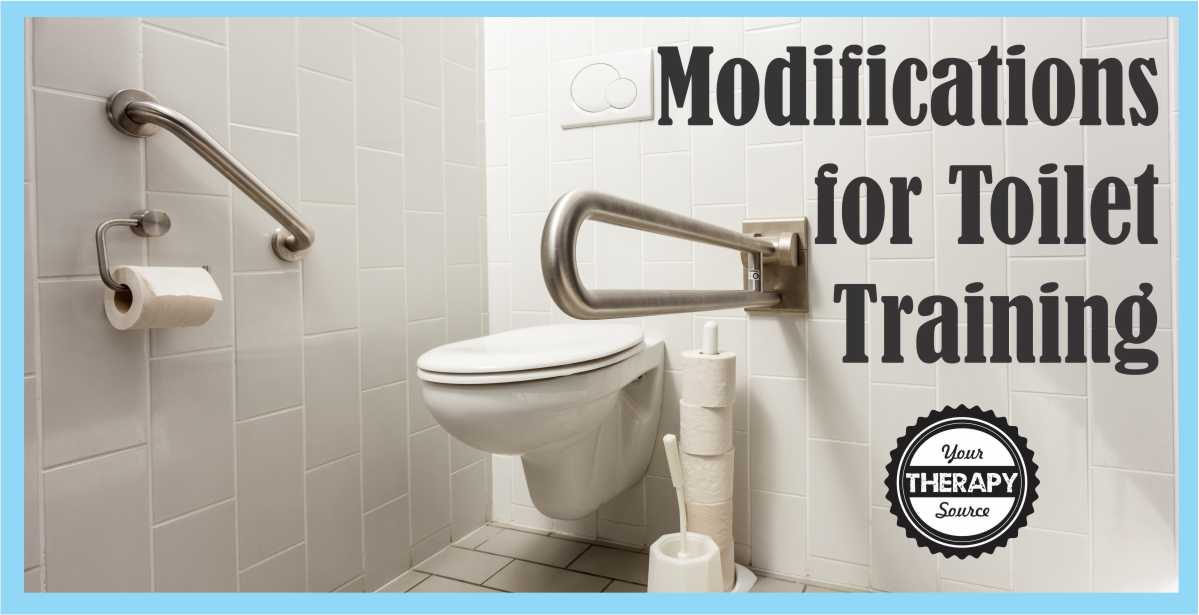
- Place
grab bars near the toilet to help with sitting balance and transfers.
- If the
child uses any assistive devices or a wheelchair, make sure that the bathroom
is accessible. Can the child fit through
the doorway and move throughout the bathroom with the assistive devices?
- Position
the toilet paper close to the toilet.
This will decrease the amount of weight shifting necessary to reach for
the toilet paper.
- If
necessary, provide adaptive seating on top of the toilet to allow a child to
relax completely while trying to void. There
are adapted seats available that mount onto the toilet, over the toilet or a
free standing commode style. Regardless,
usually the child should be positioned slightly forward positioning of the
upper body with the knees slightly higher than the hips to help encourage bowel
and bladder elimination (Noble, 2014).
Being able to use the bathroom independently,requires many steps. If you are a therapist helping a child to toilet independently and need to track his/her progress check out Personal Hygiene Rubrics to collect data on the steps of toileting.
Looking for more information about the development of the functional skills of handwriting in childhood? Stop by to see what the other occupational therapists and physical therapists in the Functional Skills for Kids series have written.
References:
Furano et al and Parks, S (2014). HELP® Checklist 0-3 Birth to Three Years.
VORT Corporation.
Lee DF, Ryan S, Polgar JM, et al. (2002)
“Consumer-based approaches used in the
development of an adaptive toileting system for children with positioning
problems.” Physical and Occupational Therapy in Pediatrics. 2002; 22(1):5-24.

 Modifications for Toilet Training


