
Showing posts with label sensory processing disorder. Show all posts

Thursday, December 21, 2017

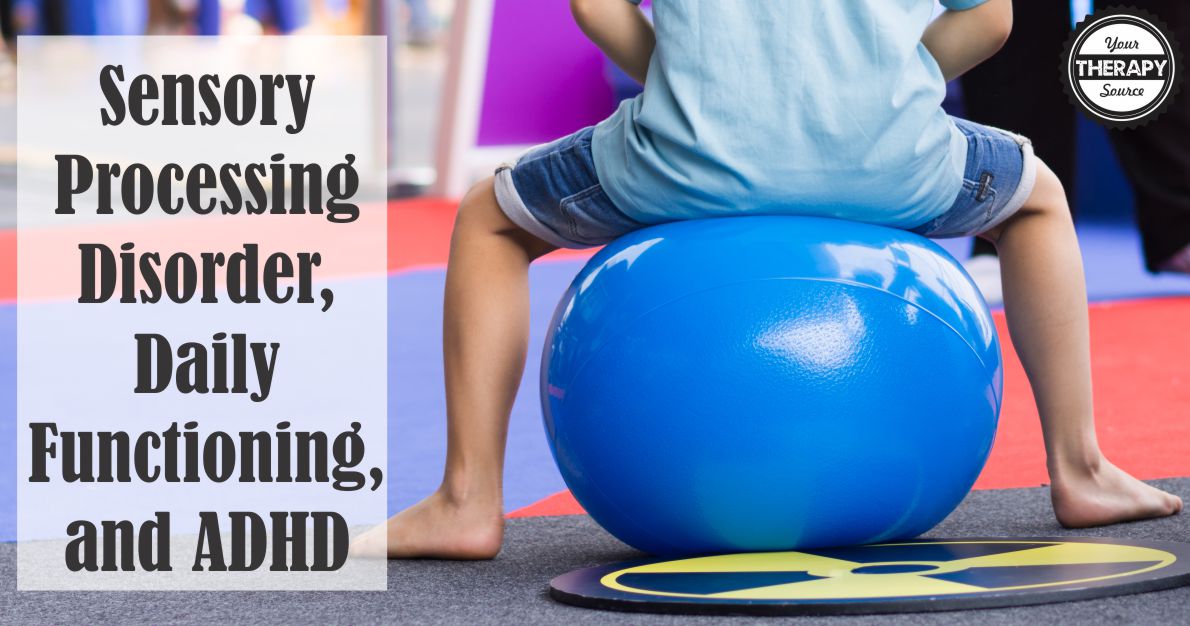
Sensory Processing Disorder, Daily Functioning, and ADHD

Sensory Processing Disorder, Daily Functioning, and ADHDSensory Processing Disorder, Daily Functioning, and ADHD

The European Journal of Paediatric Neurology published research on sensory processing disorder, daily functioning, and ADHD.  The study included 77 children, ages 8-11 years old (37 with ADHD and 39 typical controls).  Each child was evaluated using the Conner’s Parent Rating Scale-Revised: Short Form (CPRS–R:S), the Short Sensory Profile (SSP) and the Children Activity Scale for Parents (ChAS-P).  These tests were used to assess ADHD symptoms, sensory processing symptoms, and difficulties in daily function.

The results indicated the following:

  • the Short Sensory Profile total score of the ADHD group was significantly lower than that of the control group.
  • 65.8% of the children with ADHD had an abnormal Short Sensory Profile score indicating sensory processing disorder.
  • only 2.6% of the typical children control group had an abnormal Short Sensory Profile score.
  • the daily function of children with ADHD was significantly lower than in typical controls as indicated by the Children Activity Scale for Parents scores with the largest differences found in activities that require executive function skills.
  • children with ADHD and abnormal Short Sensory Profile scores, had a significantly lower daily functional ability than controls.
  • children with ADHD but normal Short Sensory Profile scores had only marginally lower daily functional abilities than controls.
  • males had lower mean ChAS-P scores than females, however,  these differences were statistically significant only among the children with ADHD.

The researchers concluded that sensory processing disorder may be a possible specifier of ADHD in children that is associated with functional consequences.

Reference:  Mimouni-Bloch, A., Offek, H., Rosenblum, S., Posener, E., Silman, Z., & Engel-Yeger, B. (2017). Association between sensory processing disorder and daily function of children with attention deficit/hyperactive disorder and controls. European Journal of Paediatric Neurology21, e171.

Do you need simple handouts to help explain sensory processing disorder and how it can affect function?  The What? Why? and How? series helps to explain different topics to students, parents, and teachers. Each hand out includes a definition of what the topic is, why it is important and how you can help.

Series 3 includes one page hand outs on the following topics:

  • Sensory Processing
  • Proprioception
  • Vestibular System
  • Tactile System
  • Sensory Registration
  • Sensory Modulation
  • Sensory Defensiveness
  • Sensory Diet
  • Self Regulation
  • Dyspraxia

FIND OUT MORE.

Sensory Processing Disorder, Daily Functioning, and ADHD

The post Sensory Processing Disorder, Daily Functioning, and ADHD appeared first on Your Therapy Source.

Wednesday, May 24, 2017

Author Spotlight: Ileana S. McCaigue OTR/L

Ileana S. McCaigue, OTR/L is an nationally certified/ registered and licensed Occupational Therapist, author, program developer, holistic clinician and educator with 40 years of experience. Her professional career and expertise include a continuum of care. These range from the neonatal intensive care unit to pediatric concerns in the home, school and community for developmental delays, especially for strategy implementation to manage sensory-based problem behaviors.  Ileana has worked in a variety of pediatric settings that included over 20 years with Special Education students in public schools at the elementary, middle, and high school levels.

She is the author of Typical Classroom Sensory-Based Problem Behaviors & Suggested Therapeutic InterventionsAutism Sleeps™, and has written a new book entitled Taming Idiopathic Toe Walking: A Treatment Guide for Parents and Therapists.  She has also created software, the Scale of Sensory Strategies (S.O.S.S.) Tool Kit™,  for data collection regarding sensory strategies.

Ileana has taken the time to participate in a Q&A session.  It is amazing to read about her experiences as an Occupational Therapist for the past 40 years allowing her to provide a wealth of information to help children today:

Q: First tell a little bit about yourself – job experience, years on the job, etc.
I am a graduate from the Medical College of Georgia in Augusta, Georgia, with 40 years of experience as an Occupational Therapist. I have specialty certifications in Sensory Integration, as a past Certified Driver Rehabilitation Specialist and for therapeutic use of Interactive Metronome to treat processing disorders. I have served as an expert witness for several court cases involving infants and children, and am a published author in the areas of case management and life care planning, as well as energy conservation, motion economy, sleep issues for children with Autism and other Sensory Processing Disorders, interventions related to clinical and school-based pediatric practice, and most recently, on the treatment of idiopathic toe walking. I have presented inservices, seminars and workshops throughout the United States throughout my career, but since 2010, a series of seminars focused on how to develop an evidence-based sensory strategy plan to treat sensory-based problem behaviors.

I was honored at the Medical College of Georgia where I was given the Barbara S. Grant Award from the Georgia O.T. Association in October 2005 for what was stated as my dedication and lifetime of outstanding service to the field of occupational therapy. In 1977 I received the Maddak Award in the area of Physical Disability for the design of the S.K.A.T.E. (Skateboard for Kinesthetic Arm Therapeutic Exercises).
My most meaningful accomplishments include the implementation of the first Neonatal ICU Occupational Therapy program in Georgia at DeKalb Medical Center in 1979; the first Occupational Therapist to develop and implement services at Scottish Rite Childrens hospital in 1981, and the establishment of the first private practice Disabled Driver Rehabilitation program in Georgia in 1982.

I retired from the Gwinnett County Public Schools after twenty years of service in 2015, and have returned to clinical private practice after providing services in Barrow County Schools in 2015-2016. My primary area of practice is for children with Autism and other Sensory Processing Disorders, especially sleep and sensory-based behavioral concerns. I also consult as a wellness and holistic therapist, and incorporate alternative treatments as appropriate.

I immigrated into the United States in 1957 from Havana, Cuba, and became a citizen at age 7 with my parents. I am bilingual and fluent in English as well as Spanish, my native language.

Q: What made you start to write books and create software?

My first book in 1980, “Motion Economy Manual: A Handbook for Conserving Energy”, was written for and published by Northside Hospital in Atlanta, Georgia, where I was the O.T. Coordinator at the time.  My next publication was as a contributor, writing Chapter 7 of “The Handbook of Case Management and Life Care Planning,” by Dr. Roger Weed, Ph.D. Interestingly, it was Chapter 7 on the Role of Occupational Therapy in Life Care Planning which began on page 77 and was exactly 77 pages in length!

I began a private practice on the side in 1981 as a small, home-based business that developed into a brick and mortar-based clinic with a staff of 12: 7 OTs, 1 PT, 1 SLP, 1 Driver Educator for the Disabled Driver Program, an Office Manager and myself. I sold my practice in 1988 to DeKalb Medical Center, and later began working in the school in 1995.

I did not publish my first book until 2009 when I completed the “Scale of Sensory Strategies [S.O.S.S.®] Toolkit”. This was written to validate the quantity and impact of the multitude of sensory strategies that I had been using in classrooms with children with Autism. I needed a formalized data collection tool to compare and contrast the effects of sensory strategies in order to develop an effective Sensory Strategy Plan [SSP] of action that was used by teachers to manage the sensory-based problem behaviors in the classrooms I served. This was in direct response to a parent threatening litigation because of an accusation that, “Not enough sensory strategies have been used with my child!” The first printing of an SSP was for this child that included the documentation of 72 sensory strategies of which only 11 had a positive impact on managing his severe problem behaviors. There was no argument from the parent at this point, and I knew then that I had a valuable tool that should be shared with other OTs and/or PTs in my same predicament.

My next book, Typical Classroom Sensory-Based Problem Behaviors and Suggested Therapeutic Interventions was to compliment the S.O.S.S. Toolkit for suggested strategies to use to collect data.

Autism Sleeps was written after discovering that the majority (80% or more) of students with Autism on my caseload with behavior concerns were reported to not sleep steadily more than 2-4 hours a night. It was written after overcoming my own sleep disorder, Post-Traumatic Hypersomnia, that I developed after a mild head injury from a motor vehicle accident when I was hit on my driver’s door by an oncoming vehicle traveling 85mph in a 45mph zone. The strategies that helped me, as well as others researched, were included in this book.

My latest book on Taming Idiopathic Toe Walking was published after consistent success using a tool that I had initially designed 27 years prior while in private practice that worked more effectively and efficiently than those available commercially for treating toe walkers. I called my tool, Toe Tamers™, since my philosophy is that we may appease or “calm” the need for sensory input that resolves in a problem behavior, but that need may arise at any point of stress and regress in that child or individual’s life further along in life.

So, to answer your question in a nutshell, I wrote books to teach others the therapeutic tools and strategies that I used that were effective with my patients, clients and/or students throughout the course of my years of practice!

Q: What is your top tip to therapists who work in pediatrics?

Work in all areas of pediatrics before you specialize in one area if you know you want to be a “peds OT”. If you are not sure, then work in all areas of adult and pediatrics before narrowing your practice to peds. Once you have decided on the area of peds that most interests and suits you to the point that you feel you are “at home” in that environment, then visit the same setting in many areas of the country or the world to get ideas and exchange your knowledge with them. You would be surprised at how OTs are uniform in some theories of practice, but how differently they approach to treat a similar problem.

Q: What is your best advice to someone who is thinking about writing a book or creating software?

To write a book, find something you have successfully used over time that you think would be of value to another parent, therapist or educator. Then, decide if you have a passion for sharing that tool, philosophy, treatment protocol or whatever the subject may be. Envision what that publication will do and look like, and develop an outline to begin writing, including case studies to validate your clinical expertise whenever possible. Once you have completed your basic manuscript, following your outline so others can follow your train of thought, share your manuscript with trusted individuals (respected colleagues, university-based peers, other professionals in related fields, depending on subject matter, and a professional editor) to review and help you with the accuracy of your statements and the complete editing process. See if some of those professionals will allow you to print a review of your publication to enhance your credibility. Whenever possible, offer your tool or approach for a research study on which you can consult and assist with the design of the study to add further validity to your book.

Q: Do you find it hard to juggle practicing OT and creating products at the same time?

I have done both simultaneously for so long that I simply shift focus as deadlines arise or as a new idea emerges. I always have at least 2-3 new ideas “brewing” in my head that keeps me going and interested in my work as an OT and small business owner while continuing to sell and promote my completed projects. To balance my “work”, as all “good OTs should do”, I enjoy my hobbies of photography and volunteer work. I submit prints for juried shows, while serving on the local Board for the North Gwinnett Arts Association, a non-profit organization for the promotion of arts and education, and I also serve on the Board of New Directions, a day program for adults with Autism Spectrum Disorders in my local community. I have found that the busier I am, the better my time management skills are! I keep my energy levels up with use of wellness products in a “wellness home”. I also remember the quotes from Nike, “Just do it!”, and Mark Twain’s, “Age is a matter of the mind. If you don’t mind, it don’t matter!” I just keep going no matter how “young” I am getting!

Q: Do you offer seminars or workshops?

I offer and develop seminars as needed or requested on sensory-based problem behaviors which can include information from several of my publications as spring-boards. Developing Sensory Strategy Plans (I prefer this term over the label, “Sensory Diet”) using strategies in the classrooms and/or homes, treating sleep difficulties in children and/or adults, or the treatment of idiopathic toe walking. Any combination of these concerns can be addressed in a seminar.

If you would like more information on Ileana McCaigue OTR/L providing a seminar or workshop in the United States or other countries please fill out the form below or here.

The post Author Spotlight: Ileana S. McCaigue OTR/L appeared first on Your Therapy Source.

Friday, March 24, 2017

New Book on Idiopathic Toe Walking

Taming Idiopathic Toe Walking EbookRenowned Occupational Therapist, Ileana S. McCaigue, OTR/L  and author of Typical Classroom Sensory-Based Problem Behaviors & Suggested Therapeutic Interventions and Autism Sleeps™, has written a new book entitled Taming Idiopathic Toe Walking: A Treatment Guide for Parents and Therapists.  This new book provides a non-invasive, efficient and effective sensory treatment strategy for children and adolescents that display atypical toe walking.   It serves as a definitive manual for children and adolescents that display atypical toe walking behaviors. Inspired by the overcoming of toe walking by numerous children during her years of practice, McCaigue’s professional expertise and personal experiences are fused into a vitally, powerful resource.

Taming Idiopathic Toe Walking Cover

This book is an easy-to-read guide for parents and pediatric, rehabilitation therapists with information on the categories and treatment of atypical toe walking behaviors. This manual explains when toe walking is considered developmentally unusual for a child’s age, and idiopathic or done for no known reason. Idiopathic toe walking is often associated with Autism Spectrum Disorders, ADHD, Specific Learning Disabilities, Developmental Delays and other disabilities with sensory processing difficulties, but can occur with typical children, as well. This book serves as a thorough resource for use of an alternative treatment strategy to “calm” the toes, and enable a typical walking pattern in those challenged with idiopathic toe walking.  The ultimate goal is the prevention of tendon shortening and resultant limited motions of the ankles and feet from prolonged toe walking that can ultimately lead to the need for injections, bracing or at worst, surgery, to remediate the muscular imbalance.

Taming Idiopathic Toe Walking: A Treatment Guide for Parents and Therapists provides step-by-step instruction of how to make “Toe Tamers”, a unique remediation tool that provides the sensory input that a child or adolescent with idiopathic toe walking needs to overcome this potentially serious problem behavior. A protocol and usage guide is available for: 1) How heavy to make the Toe Tamers, 2) How to apply them, 3) How often they should be worn, and 4) How long to use them to calm the toes. This would enable relaxation of the feet to stand with full weight bearing on the floor with or without socks and shoes.  In addition, a HOME Program sheet is included in English and Spanish to instruct parents on the rationale for applying the Toe Tamers, as well as when and how to effectively use them.

Additionally, forms are available for logging the impact of the Toe Tamers. A record and graphs are included to track progress on the length of time, as well as the reduction of heel height, as the Toe Tamers effectively help the toes to lower the entire foot onto a flat surface.

As the author explains, her book introduces a sensory treatment strategy for idiopathic toe walking that all should consider exploring.

“Children with idiopathic toe walking whose feet are always bouncing on their toes, seem to calm their bodies down after their feet are relaxed. If you think about it, when your feet hurt or figuratively scream at you internally, you cannot relax your body. So, it would make sense that by calming the toes and relaxing the feet, that these children’s bodies would relax overall, as well! It is by providing the sensory input needed by these children’s feet, that their toes can lower and enable a typical pattern of walking.  Using a holistic, sensory strategy in lieu of more traditional interventions will give their feet the input needed to help them overcome this problem behavior,” says McCaigue.

The book is unique in the marketplace due to the author’s own successful use of its methods over a lifetime of experience.  “I personally implemented the strategies outlined in this book over the past 27 of my 40 years as an Occupational Therapist working with children. I hope this easy-to-make, therapeutic, sensory strategy will help many children with idiopathic toe walking, and prevent the need for surgery or other more invasive treatment techniques. My goal is to help children with the least restrictive, most effective and efficient way to remediate atypical toe walking,” McCaigue explains.

About the Author:

A 1977 summa cum laude graduate from the Medical College of Georgia in Augusta, Georgia, Ileana S. McCaigue, OTR/L.  She is a nationally certified/ registered and licensed Occupational Therapist, author, program developer, holistic clinician and educator with 40 years of experience. Her professional career and expertise include a continuum of care. These range from the neonatal intensive care unit to pediatric concerns in the home, school and community for developmental delays, especially for strategy implementation to manage sensory-based problem behaviors.

Ileana has worked in a variety of pediatric settings that included over 20 years with Special Education students in public schools at the elementary, middle, and high school levels. She currently works with children in several clinics and at community sites. Ileana also sees private clients with special needs to provide home and community based treatment as needed, including sensory integration therapy, interactive metronome and other brain-based interventions to improve sensory-based problem behaviors. She also serves as a holistic consultant providing recommendations to facilitate the development of a “wellness home” environment for children and adults.

Ileana was the recipient of the Barbara S. Grant Award from the Georgia O.T. Association for her dedication and lifetime of outstanding service, as well as a recipient for the Maddak Award in the area of physical disability.

Taming Idiopathic Toe Walking Cover

PURCHASE Taming Idiopathic Toe Walking: A Treatment Guide for Parents and Therapists

The post New Book on Idiopathic Toe Walking appeared first on Your Therapy Source.
Monday, January 16, 2017

How Do You Talk to Parents about Sensory Sensitivities?

How Do You Talk Parents about Sensory Senstivities

After reading a thought provoking blog post from Christopher Alterio,OTR, on Deconstructing the myth of clothing sensitivity as a ‘sensory processing disorder’, it really made me think about how we talk to parents as pediatric therapists.  Not just about clothing sensitivity or other sensory sensitivities but about any concern that a parent comes to discuss with a pediatric occupational or physical therapist.  I strongly recommend that you read the entire blog post.  In general, the goal of the blog post is to “change the online narrative that unnecessarily pathologizes this issue as a ‘sensory processing disorder.'”  I agree with Mr. Alterio’s position in the post but it made me consider the changing job description of pediatric therapists that seems to be evolving.

We frequently read complaints about schools, Common Core and teachers placing some high level expectations on children.  What about parents?  We too have raised the bar of what we expect from our children.  It appears as if society wants every child to fit into a perfect, normal mold which is impossible.  Each and every child is unique with his/her own talents.  We seem to forget this all too often.  Parents quickly do go to the internet to search out answers for behavioral concerns.  And like Mr Alterio said, they are real concerns.

Parenting is a completely different job than it was years ago.  In households with two parents, frequently they both work.  In single parent households usually the parent is working.  This situation alone raises the expectations that are put on children.  Let’s compare a household 50 years ago to today:

Sensory motor experiences as a child years ago (where one parent or grandparent was home to take care of the child) – take a bath once a week, get dressed by yourself at a leisurely pace, decreased food choices, more unstructured free play, more outdoor time, less television time,  no computer/tablet/phone time, etc

Sensory motor experiences as a child today – take a bath every day or every other day, get dressed at lightening speed, increase in different foods and flavorings, little to no unstructured free play, decreased outdoor time, increased computer time,longer school day and increased homework.

Is it possible, that children have not changed over time but our expectations as parents are unreasonable leading to increased meltdowns, tantrums and sensory sensitivities that affect our daily routines more than years past?  There are of course a small percentage of children who do not fit into this category when it comes to sensory processing and these are the children who may need direct occupational or physical therapy services for a period of time.  But the parents of children whose days are disrupted due to sensory preferences and sensitivities can be difficult.  We are constantly in rush mode.  If you work outside the home here is an example of a daily routine that I am talking about –

Get kids ready for day care or school resulting in quick morning meals (if at all), dress quickly, make lunches, gather up all school supplies and get out the door.   “Johnny” doesn’t want to put his socks and what happens?  Chaos!  Tempers are short, Johnny is rushed and the socks might be uncomfortable.  You have to go so you grab Johnny a different pair of socks and try again.  Still no go – Johnny refuses to wear the socks, you are already late for work and the kids may miss the bus.  Forget it – Johnny goes to school with no socks on or you force him to wear the socks he finds uncomfortable and they bother him all day.  Johnny comes home from school tired out from the hectic morning, all day long at school and now homework expectations.  After homework, eat a quick dinner and off to the soccer field for a game.  Now Johnny needs to put on his tight soccer socks, shin guards and uniform shirt.  Again, running late maybe you help or maybe you change the socks.  Sooner or later he and possibly even you as the parent melts down due to fatigue.

I am sure some of the above story sounds familiar to many parents.  It may not be the socks, but shoes, a sweater, lunch choices, etc. Whatever it is, parents do need our help and expertise on childhood development.  It is almost as if this has fallen into the laps of pediatric therapists.  When you think of job descriptions, no one else looks a childhood functions, motor skills and life skills like we do as therapists. Sure there are pediatricians, nurses, early childhood teachers, etc who can help as well but they are usually inundated with child after child and can not take the time to educate parents on how to help their children either through verbal prompts, environmental modifications or schedule changes.

We do need to be VERY careful not to jump to conclusions about every concern a parent comes to us with since there are so many factors that influence a young child’s behaviors and motor actions.   We do NEED to help educate parents on how to make their lives and their children lives more fulfilling.

Please take the time to read the blog post, he offers some very good advice – would love to hear your thoughts.

The post How Do You Talk to Parents about Sensory Sensitivities? appeared first on Your Therapy Source.

Tuesday, July 5, 2016

Calm Down Cards

Calm Down Card Cover 1
Here is the newest download from Your Therapy Source – Calm Down Cards.  This is a wonderful collection of photographs with calming phrases to help children to calm down.  You can download a free poster – Just Breathe.
Calm Down Cards Freebie
This set of Calm Down Cards includes 30 full size photographs with calming phrases (11″ by 8.5″ page) and smaller size (4″ by 3″ cards). Print the full size cards or the smaller size cards. You could also laminate the smaller cards to place on a key ring to toss in a calm down kit. Children can simply use visual imagery with the photos to help them calm down. Another option is to view the photographs with calming phrases and music as a PowerPoint show on your computer, tablet or phone.
The full color photographs encourage children to use visual imagery to help them to calm down and return to a “ready to work” state.  If you don’t want to print the Calm Down Cards, children can view the full size pages on the computer, tablet or phone.

Thursday, June 23, 2016

Dried Bean Stress Balls

Dried Bean Stress BallsHere is a new twist on a do it yourself stress ball – dried bean stress balls.  You might be wondering what make these any different than others?  Well until you make one and feel it you will not understand.  These dried garbanzo bean stress balls feel more like a deep massage in the hands.  It definitely steps up the tactile input!  The secret ingredient is the garbanzo beans (also known as chick peas).  You can read more about how I colored the garbanzo beans for a sensory bin in a previous post.

To make the garbanzo beans stress balls you will need dried garbanzo beans, balloons, scissors and the top of a plastic water bottle.  I came up with (in my opinion) the most AMAZING hack ever to keep the balloon open.  If you have ever tried to make these it can be so hard to keep the top open to get the ingredients in the balloon.  It is usually a two man job.  So my idea was to cut off the top of a plastic water bottle.  Simply slip the balloon inside and over the lip of the bottle.  Presto chango your balloon stays open so you can put the beans in!!!!  I know, not that amazing but it sure did impress me.

Dried Bean Stress Balls hack

Moving on… now all you need to do is fill the balloon up.  Have the kids help using a nice pincer grasp to get all those beans inside.  Dried Bean Stress Balls pincer grasp

Once the balloon is filled up, tie it off.  Cut off the top of another balloon and insert the bean ball into the balloon with the top cut off.

Dried Bean Stress Balls balloon

Now you are ready to use the stress balls.  Since these provide a heavier tactile input that your typical stress ball some children may dislike the feeling.  Some children may crave it.  Here are some suggestions:

  1. stress ball – use it to relieve stress by squeezing it.
  2. fidget – keep the hands busy so you can sit still squish and squeeze the ball (it is a little noisy).
  3. warm ups before handwriting – rub this between your hands to wake up the small muscles and get them ready to write.
  4. foot massage – place it under your foot and roll it back and forth to work out any small muscle cramps in the foot (alert – this is some serious sensory input).
  5. coordination skills – these make excellent juggling balls.  The garbanzo bean balls are a nice weight providing some extra input to catch and toss.
  6.  challenge your balance – try to stand on one foot and roll it back and forth.  Kick it to a friend.

picture card1Need more ideas for sensory breaks, stress relief and tactile input? Check out the Sensational Brain membership for creating effective sensory diets.

The post Dried Bean Stress Balls appeared first on YourTherapySource.com Blog.

Tuesday, June 7, 2016

June 2016 Issue of the Your Therapy Source Magazine

June 2016The June issue of the Your Therapy Source digital magazine is now available for free as usual. This month’s issue includes articles on yoga and self regulation, in class sensory strategies, video prompting for ADLs, developmental progression of playground skills and more!

Happy reading!

The post June 2016 Issue of the Your Therapy Source Magazine appeared first on YourTherapySource.com Blog.

Saturday, February 13, 2016

How To Help Students Who Fidget

5 tips for students who fidget - www.YourTherapySource.comIf you walk into any classroom, you will most likely observe students who fidget.  Perhaps they rock back and forth in the chair, bounce their knees up and down or wiggle in their seats. Frequently, students fidget to stay in an alert state to be ready to learn.  Here are 5 tips to help students who fidget:
  1.  Just let the student fidget! – Some research indicates that higher rates of activity level result in significantly better working memory.  If the student is not bothering anyone and it is not impeding their function or educational abilities just let the student fidget.  Maybe provide the student with a stability ball or disc cushion.  
  2.  Move the student’s seat – If a student continues to fidget and perhaps is distracting others, can you move his/her seat to a location where it will be less obtrusive.  Perhaps in the back of the classroom so the student can stand.  
  3. Provide an object to fidget with the student’s hands or feet. – Maybe the student can rub a small rock to keep his/her fingers busy.  Allow the student to doodle – doodling while writing has been shown to improve memory recall. Tie some theraband around the legs of the desk or chair and the student can fidget his/her feet against the band.
  4. Let the student chew gum, drink through a straw or crunch on a snack.  – This may help with focus, attention span and even math skills.
  5. Help students get the wiggles out! – Provide frequent movement breaks throughout the day. Research indicates that kids learn better and stay on task after breaks.  Need simple ideas that are easy to implement?  Check out all these brain break ideas.

Wednesday, October 21, 2015

Pool Noodle Seat

Pool Noodle Seat from http://www.YourTherapySource.com/blog1Do you have any students who need just a little extra reminder of where the chair ends?  Maybe an external cue of where to put their hips?  Grab a pool noodle.  Measure it to fit the seat of the chair and cut off the excess.  Use some duct tape and strap it to the chair.  That’s it – for just a dollar now you have a classroom chair with that extra cue to help students with body awareness issues or balance concerns.  Give it a try!
Body Awareness Games Personal Space Journey from www.YourTherapySource.com
Personal Space Journey
By: Your Therapy Source Inc
Summary: Collection of activities to teach children about personal space 
including many body awareness exercises and a social story on personal 
space.

Monday, April 20, 2015

Research: Analysis of Sensory Integration Therapy

research analysis of sensory integration therapy - www.YourTherapySource.com/blog1The Journal of Developmental and Physical Disabilities published a meta-analysis on the use of sensory integration with individuals who have or at risk for a developmental or learning disability or delay. The outcomes from 30 studies on sensory integration therapy were reviewed and analyzed.

The results were the following:
1. Studies that compared sensory integration therapy to no treatment yielded a statistically significant but small effect
2. Studies that compared sensory integration therapy to alternative interventions there was no significant differences
3. Many flaws were identified including issues in clearly defining treatment, evaluating integrity, poor quality of research and diversity of outcome measures.

Overall, there was little evidence that sensory integration therapy was an effective intervention for any diagnostic group, particularly when functional blinded outcome measures were analyzed. The authors discussed the minimum methodological requirements for any future research studies.

Reference: Han Ming Leong et al. Meta-analysis of Research on Sensory Integration Therapy for Individuals with Developmental and Learning Disabilities. Journal of Developmental and Physical Disabilities. April 2015, Volume 27, Issue 2, pp 183-206

[subscribe2]

The Scale of Sensory Strategies   (S.O.S.S.) Tool Kit™ from http://yourtherapysource.com/soss.html


The Scale of Sensory Strategies (S.O.S.S.) Tool Kit™ provides an evidence-based plan of care with sensory strategies that will optimize a child’s behavior in the school, home and community.  Find out more at http://yourtherapysource.com/soss.html

Monday, December 22, 2014

Sensory Over-Responsivity, Autism and Sleep

Sensory Over-Responsivity, Autism and Sleep more info at http://yourtherapysource.com/autismsleeps.htmlSleep Medicine published research on a large well-characterized sample of 1347 children with autism spectrum disorder (ASD) examining the relationship between sleep problems, sensory over-responsivity, and anxiety.  Statistical analysis was completed using the  Children's Sleep Habits Questionnaire, Child Behavior Checklist, and Short Sensory Profile.

The following results were recorded:

  1. anxiety was associated with all types of sleep problems (i.e., bedtime resistance, sleep onset delay, sleep duration, sleep anxiety, and night wakings).

  2. sensory over-responsivity (SOR) was correlated with all sleep problems in bivariate analyses.

  3. further statistical analysis revealed that SOR remained significantly associated with all sleep problems except night awakenings for older children, while for younger children SOR was no longer significantly associated with bedtime resistance or sleep anxiety.


The researchers concluded that children with ASD who have anxiety and SOR may be particularly predisposed to sleep problems including possible difficulties with hyperarousal. Future research using physiological measures of arousal and objective measures of sleep are recommended.

Reference:  Mazurek , M. and Petroski, G. Sleep problems in children with autism spectrum disorder: examining the contributions of sensory over-responsivity and anxiety. Sleep Medicine Publication stage: In Press Accepted Manuscript.  DOI: http://dx.doi.org/10.1016/j.sleep.2014.11.006

[subscribe2]

Autism Sleeps - available at www.YourTherapySource.comAutism Sleeps™ serves as a thorough resource of sleep sensory strategies and suggestions for preparing the “sleep environment”. Sample bedtime and wake-up routines are provided as templates, especially to guide parents of children with sleep difficulties.  Find out more at http://yourtherapysource.com/autismsleeps.html

Wednesday, December 10, 2014

Sensory Based Problem Behaviors and Suggested Interventions

Typical Classroom Sensory-Based  Problem Behaviors & Suggested Therapeutic Interventions available at http://yourtherapysource.com/mccaigue.html School based occupational and physical therapists play a key role in suggesting therapeutic interventions for students with sensory based behaviors.  It is our job to educate teachers, parents and students as to why a child's behaviors may be sensory based and what sensory strategies can be used to help that child better navigate the educational environment.

Typical Classroom Sensory-Based Problem Behaviors & Suggested Therapeutic Interventions by Illeana McCaigue, OTR offers many suggestions for therapeutic interventions for 12 different problem behavior categories. The classroom sensory based problem behaviors include the following:

  1. Sitting/Poor Work Tolerance

  2. Vision/Attention Related

  3. Oral/Facial Related

  4. Visual Sensitivities

  5. Tactile/Proprioceptive/Personal Space Issues

  6. Self-Injurious Behaviors

  7. Gut Reactions Due to Perceived Stress/Anxiety

  8. Difficulty Staying with the Group

  9. Delayed Immature/Inefficient Grasp Pattern

  10. Visual/Proprioceptive Sensory Seeking Wrist/ Hands

  11. Difficulty with Positioning/ Lower Extremity Awareness

  12. Oral Motor/ Self-Feeding Issues


This electronic book will help new and seasoned therapists determine what problem behavior the child may be displaying, possible underlying causes and sensory strategy solutions to address the behavior.

Find out more about Typical Classroom Sensory-Based Problem Behaviors & Suggested Therapeutic Interventions by Illeana McCaigue, OTR   and download a sample page at http://yourtherapysource.com/mccaigue.html

[subscribe2]

Tuesday, October 7, 2014

Learning Style and Sensory Processing

learning styles and sensory processing www.YourTherapySource.comIn the school setting, teachers discuss various learning styles of students. There are three main types of learning styles:

1. Auditory learner – learns best by using sense of hearing
2. Visual Learner – learns best by sense of vision
3. Kinesthetic/ Tactile Learner – learns best by doing or touching

More teachers are now accommodating students and presenting new material in various ways to help all students learn more efficiently. Teachers can offer choices regarding different ways to complete assignments that allow students the freedom to utilize their own learning styles. When determining a students learning style, a teacher looks at the students strengths. How do they learn best – auditory input, visual input or tactile input?

Is is starting to sound familiar? When determining if a student has sensory processing disorder, pediatric therapists look at auditory, visual and kinesthetic input and output. When an pediatric therapist evaluates a student for sensory processing disorder typically weaknesses are determined. For example, “this student is a sensory seeker constantly looking for movement opportunities”. Pediatric therapists can also look at students in a different manner with regards to learning styles and offer suggestions to the teachers in a language that they can fully understand. Therefore in addition to offering treatment strategies to address the students core sensory issues try:

1. offering recommendations on how to present academic material to the sensory seeking student for that student may be an excellent kinestethic/ tactile learner

2. providing the teacher with a list of methods or activities that may make it easier for the student to learn a new concept.

3. following up on recommendations – did the student perform better on as assignment when there was a kinesthetic approach to the task?

4. offering suggestions with a universal design approach to teaching to benefit all students in the classroom.

Modifications and Interventions for School : Reproducible reporting forms with hundreds of suggested interventions.  Find out more at http://yourtherapysource.com/modsdownload.html

[subscribe2]

Tuesday, August 19, 2014

Parents Hopes for Outcomes in OT with an SI Approach

Parental Hopes for OT with SI Approach http://www.YourTherapySource.comThe American Journal of Occupational Therapy published research analyzing 275 parental responses to 3 questions on history intake forms regarding concerns and hopes for their children's outcomes in OT with a sensory integration approach. The results indicated that parents had four types of concerns for their children:
1. self-regulation
2. interacting with peers
3. participating in skilled motor activities
4. self-confidence

In addition, parents were hoping that occupational therapy would help their children develop self-understanding and frustration tolerance to self-regulate their behavior in socially acceptable way.

The researchers concluded that assessment and intervention should focus on some aspects of self-regulation, social participation, skills, and self confidence.

Reference: Parents’ Explanatory Models and Hopes for Outcomes of Occupational Therapy Using a Sensory Integration Approach American Journal of Occupational Therapy, July/August 2014, Vol. 68, 454-462. doi:10.5014/ajot.2014.010843

[subscribe2]

Sunday, June 8, 2014

Teach Children to "Self Talk" to Improve Abilities

Improve skills with self talkSelf talk is a mental strategy used to improve performance in sports.  Using self addressed cues (short phrases or a few words), self talk attempts to trigger appropriate responses by focusing your attention on the skill therefore  improving performance.  Researchers performed a meta analysis on 32 sport psychological studies on self talk with a total of 62 measured effects and publisher the results in Perspectives on Psychological Science.  The analysis indicated that self talk improves sport performance.  In addition, the results indicated that self talk is more effective in certain situations.  Here are the results:

1.  For tasks requiring fine skills or for improving technique “instructional self-talk”, such as a technical instruction is more effective than ‘motivational self-talk’ (e.g., “give it all”)

2.  Motivational self talk seems to be more effective in tasks requiring strength or endurance by boosting confidence and psyching-up for competition

3.  Self-talk has a greater effect on tasks involving fine skills (such as sinking a golf ball) rather than gross skills (e.g., cycling) (probably because self-talk is a technique which mostly improves concentration).

4.  Self-talk is more effective for novel tasks rather than well-learned tasks because it is easier to improve at the early steps of learning.

The researchers recommend to practice your self talk using a consistent script in varying conditions to improve potential.

Why not instruct children in scripts for self talk for certain skills such as handwriting (i.e. child self talks the strokes), organizational skills (i.e. self talk the steps of packing up materials), self talk tying shoe laces, etc.  Use motivational self talk when working on increasing endurance or strength.

Reference:  Association for Psychological Science. Thoughts That Win. Retrieved from the web 6/8/14 at http://www.psychologicalscience.org/index.php/news/releases/thoughts-that-win.html.

[subscribe2]

Friday, June 6, 2014

5 Suggestions to Increase Family Involvement

5 Tips to Increase Family InvolvementHere are some simple suggestions to increase family (child, parents, siblings, other care givers, etc.) involvement in a child's therapy plan of care:

1.  Ask the family what their goals are in terms of therapy.  Collaborate to create appropriate goals.

2.  Take your time and be attentive.  Don't rush the family when talking about the plan of care.  Answer any questions.  Don't allow yourself to be interrupted.

3.  Offer choices and compromise.  Make every effort to offer suitable therapy times when scheduling that works for all people involved.   If you want to meet for a team meeting every month but the family can only meet every other month, you will need compromise.  Be realistic about home exercise programs.  Every family is busy so perhaps suggesting lengthy, extensive home exercise programs is not the best choice.  Try to incorporate activities into the everyday routine.

4.  Stay positive.  No one likes to hear negative things about their child.  Keep a positive mindset and focus on the child's strengths.

5.  Communicate.  Ask the family how they would like to communicate i.e. daily notebook, email, telephone, etc.  Once you determine how  and when you will communicate, make sure you follow through and update the family.

communication cover


Title: School and Home Communication Forms for Therapists
By: Your Therapy Source

Summary: Download of 21 forms to increase communication between therapists,
school staff, students and parents.

Product Details:
E-Book: 25 pages
Language: English
Delivered electronically in PDF, Open Office and Word Format

Find out more information at http://yourtherapysource.com/commforms.html


Tuesday, June 3, 2014

Self Improvement

free self improvement worksheetHere is a self improvement worksheet to complete to establish what steps need to be taken to achieve a goal.   I love any activity that requires the child (or an adult like myself) take ownership of how one can improve or reach a goal.  You can print this FREE worksheet with blank boxes to write or draw in or dotted handwriting lines to use as a guide.  Download the two pages at http://www.YourTherapySource.com/freeselfimprovement.


This form could be used for:

  • behavior modification

  • self regulation

  • establishing sensory diet activities

  • goal setting


Here is an example of how it could be used - Student is unable to walk in a class line without touching peers.  Therefore the worksheet may look something like this:

Currently I can walk in a class line without talking.

I need to improve my ability to walk in a line without touching anyone else.

My goal is to walk in a line from the classroom to the cafeteria without touching any of my peers.

List ways to reach my goals:

  1. Stand at the back of the line.

  2. Do 10 wall push ups before I leave the classroom.

  3. Put my hands in my pockets while I walk.

  4. Hold a squishy object while I walk.

  5. Leave extra space between me and my peers while walking.


I will achieve the goal on this date:  June 25.

I can think of a few ways I could fill out the form for myself.  I need to improve being organized, household chores, time management skills, etc!  I better print this form a few times.

Tuesday, May 13, 2014

Simple Sensory and Fine Motor Counting Bin

Simple Counting Sensory and Fine Motor BinI love sensory bins and am always impressed by all the fun ones I see on Pinterest.  The only problem is some of them would cost a fortune to make or are too hard to clean up (rice is such a pain to pick up off of the rug).  I am all for messy play but at times I just don't have the time to clean it up.


For this simple sensory bin, I dyed some dried pasta with food coloring and a few drops of alcohol (put dried macaroni in plastic bag with a few drops of food coloring and rubbing alcohol, shake the bag and pour out onto paper towel to dry).  I added a few froggy erasers I got at the dollar section.  So for about $3 I had a great sensory bin that was easy to clean up.

For this activity, the child rolled the die.  She had to identify what number was rolled, find that many froggy erasers and count them.  I wrote the number, dots and written numeral on the paper for her to reinforce reading numbers.

When done counting, you could play with the sensory bin - sort the pasta by type or color.  

If you want to add in gross motor skills, you could move the sensory bin across the room, roll the die, perform a locomotor action to the counting page and place the erasers on the paper.  Repeat until all the numbers 1-6 have been rolled.

This activity encourages:

  1. tactile input

  2. fine motor skills

  3. gross motor skills

  4. visual perceptual skills

  5. counting skills - common core standards addressed with this activity:  CCSS.MATH.CONTENT.K.CC.A.3 - Write numbers from 0 to 20. Represent a number of objects with a written numeral 0-20 (with 0 representing a count of no objects).


CCSS.MATH.CONTENT.K.CC.B.4 - Understand the relationship between numbers and quantities; connect counting to cardinality. 


CCSS.MATH.CONTENT.1.NBT.A.1 - Count to 120, starting at any number less than 120. In this range, read and write numerals and represent a number of objects with a written numeral.


IEP Goals related to the common core for OT/PT


IEP Goals Related to the Common Core for OT/PT is a large goal bank for school based occupational and physical therapy that is aligned with the English Language Arts (ELA) and Mathematics common core standards for grades K-2. Find out more at http://yourtherapysource.com/commoncorek2.html


Monday, April 21, 2014

5 Tips for Sensory Seekers During Group Activities

5 tips for sensory seekers in groupsHere are 5 suggestions to help group therapy sessions go smoothly for sensory seekers.  These tips are great for classroom teachers as well for during circle time or large group instruction.


1.  Begin the activity with a movement warm up.  Depending upon your group of students you many need some whole body activities, crossing midline activities or simple stretches.  When in doubt, proprioceptive activities always work wonders.  Try Proprioceptive Poems at  http://yourtherapysource.com/proprioceptivepoems.html

2.  Mix up how and where the students are seated during group time.  For example, can they stand to to complete the activity, prone prop on the floor, sit on a therapy ball, etc?

3.  Use visual cues for personal space.  During listening tasks, can each student sit on a carpet square or perhaps inside a hula hoop?  Put painter's tape on the floor around the student's desk to indicate personal space.  

4.  Take a break half way through for an additional movement activity.  Try to incorporate movement into the academic or motor skill task to allow for a quick movement sensory break.   Need easy ideas?  Check out Monster Movement Transition Cards at  http://yourtherapysource.com/monstermovements.html or pick a Mini Movement Break at  http://yourtherapysource.com/minimove.html

5.  Establish a routine that you stick to each group session.  Every time you are leading a group try and keep the same routine.  Over time, the students will know exactly what the expectations are helping to reduce negative behaviors.  

[subscribe2]

25 School Based Therapy Tip Sheets from http://yourtherapysource.com/tipsheets.html

Summary: These 25 Tip Sheets for School Based Occupational and Physical Therapists are jammed packed with information to distribute to teachers and parents.  Find out more at http://yourtherapysource.com/tipsheets.html
Related Posts Plugin for WordPress, Blogger...