Showing posts with label yoga. Show all posts

Thursday, November 16, 2017

Effects of Yoga on Autism Symptoms

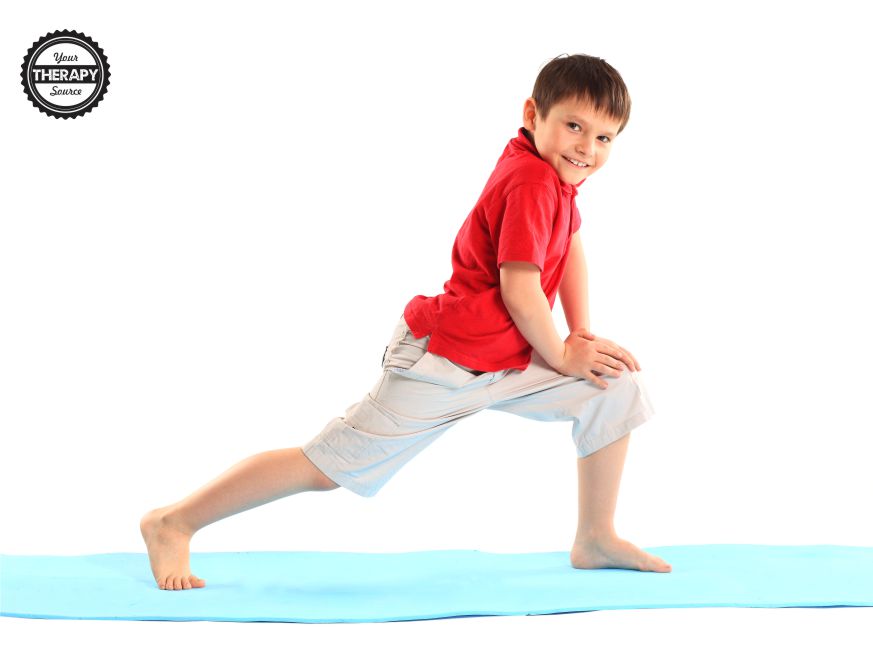
Effects of Yoga on Autism SymptomsEffects of Yoga on Autism Symptoms

Complimentary Therapies in Clinical Practice published research on the effectiveness of yoga training program on the severity of autism.  The study consisted of 29 children (ages 7-15 years) with high functioning autism. The participants were randomly assigned to the yoga treatment group (received 24 sessions of yoga training over 8 weeks) or the control group.  Parents were not aware whether their child was in the yoga treatment or control group.  Parents or caregivers completed the autism treatment evaluation checklist (ATEC) at the beginning and the end of the intervention.  Read more about the ATEC here.  View the Autism Treatment Evaluation Checklist here.

The results indicated that:

  • yoga poses had a significant effect on the following subscores of ATEC: sociability, cognitive/awareness, and health/physical behavior.

  • there was no significant effect of yoga poses on the speech/language/communication subscores of the ATEC.

The researchers concluded that a yoga training program may help to reduce the severity of symptoms in children with autism.

Reference:  Sotoodeh, M. S., Arabameri, E., Panahibakhsh, M., Kheiroddin, F., Mirdoozandeh, H., & Ghanizadeh, A. (2017). Effectiveness of yoga training program on the severity of autism. Complementary Therapies in Clinical Practice, 28, 47-53.

Check out some of our amazing yoga resources for kids!

Yoga CardsYoga Moves Cover YTSYoga for Every SeasonScooter & Me Bundle – 9 Videos & 16 Self-Regulation Flash Cards

Blog post photo by YURALAITS ALBERT/Shutterstock.com

Effects of Yoga on Autism Symptoms


The post Effects of Yoga on Autism Symptoms appeared first on Your Therapy Source.

Friday, June 16, 2017

Fidget Spinner Yoga – FREE Printable

Fidget Spinner Yoga from Your Therapy Source

The Fidget Spinner Workout has been a huge success with hundreds of people downloading it to get kids moving while using their fidget spinners.  I decided to create another printable to incorporate yoga poses into the fidget spinner workout.  You can download your FREE Fidget Spinner Yoga at the end of the post.

After you sign up for the newsletter you can download your free Fidget Spinner Yoga (if you already subscribe it is still free for you – just enter your email and you will be redirected to the link).

Print the fidget spinner yoga page on cardstock and laminate for durability.  Tape a colored triangle to create an arrow on one of the three circles of the fidget spinner. Place your fidget spinner in the middle of the big spinner. Spin the fidget spinner. When it stops, determine which yoga pose the spinner landed on. Spin the fidget spinner again and perform that yoga pose that it previously landed on for the entire time the fidget spinner spins.  It’s that simple!  Spin and pose… spin and pose…

Have you seen all of our other yoga products for kids?  Check out the following titles:

  1. Yoga Cards and Game Ideas
  2. Yoga Moves Visual Cue Cards
  3. Scooter and Me Bundle includes 9 Videos & 16 Self-Regulation Flash Cards Mp4 download of three videos combining stories + creative movement + Yoga + Brain Gym®
  4. Yoga for Every Season
  5. All of our yoga titles are listed HERE

The post Fidget Spinner Yoga – FREE Printable appeared first on Your Therapy Source.

Wednesday, February 22, 2017

Yoga and ADHD

Yoga and ADHD

Yoga incorporates breathing techniques, postural control, muscle strengthening, flexibility and cognitive control which can help promote self-control, attention, body awareness, and stress management. These are all skills that are beneficial for children with ADHD to practice.

Recent research analyzed the benefits of yoga in 49 children (average age 10.50 years old) with ADHD. The participants were assigned to a yoga exercise group for an 8 week exercise intervention, 2x/week x 40 minute sessions or a control group. All subjects were evaluated with the Visual Pursuit Test and Determination Test prior to and after the intervention.

The Visual Pursuit Test is used to assess visual perception involving sustained attention and the Determination Test is used to evaluate the ability to determine multiple-choice reaction requiring inhibitory ability and selective attention.

The results indicated the following:

  • significant improvements in accuracy rate and reaction time of the two tests were observed over time in the exercise group compared with the control group.

The researchers concluded that yoga exercises can be beneficial as a behavioral intervention for children with attention and inhibition problems.

Reference: Chou C, Huang C. (2017) Effects of an 8-week yoga program on sustained attention and discrimination function in children with attention deficit hyperactivity disorder. PeerJ 5:e2883https://doi.org/10.7717/peerj.2883

Check out some of our amazing yoga resources for kids!

Yoga CardsYoga Moves Cover YTSYoga for Every SeasonScooter & Me Bundle – 9 Videos & 16 Self-Regulation Flash Cards


The post Yoga and ADHD appeared first on Your Therapy Source.

Friday, December 9, 2016

Mindfulness and Yoga for School Children

Mindfulness and Yoga in School Children
Mindfulness can be defined as paying attention in a particular way: on purpose, in the present moment, and nonjudgmentally.  Research has indicated that mindfulness in school children may help to improve:
1.  emotional well being.
2.  learning  and  associated cognitive  processes,  such  as  attention,  focus  and  executive function skills.
3.  mental health.
4.  physical health (reduction in blood pressure).
Many schools are adding mindfulness and yoga programs into their daily routine.  Move with Me offers a wide variety of videos and flash cards to help you get started with a combination of mindfulness and yoga programs for young children.  Here are some suggestions if you are working on:
The best deal is on the complete bundle of 9 videos and flash cards.  This can take care of your lesson planning for all of 2017!
Scooter & Me Bundle – 9 Videos & 16 Self-Regulation Flash Cards
Reference:   Weare, Katherine (2012) Evidence  for  the  Impact of  Mindfulness on  Children  and Young  People.  Retrieved from the web on 12/9/16 at http://ift.tt/2h636CN

The post Mindfulness and Yoga for School Children appeared first on Your Therapy Source.

Saturday, November 19, 2016

Troll Yoga Poses

Troll Yoga Your Therapy Source

With the popularity of Trolls in full swing right now, I though the kids would enjoy some Troll yoga poses.  These Troll yoga poses are beneficial to increase focus, concentration, balance, core strengthening and relaxation.  Download your free Troll yoga poses below.

Here are the directions to complete the yoga poses:

Tree Pose –
1. Find a point to focus on with your eyes. Place your right foot on the inner part of your left leg. Steady your balance.
2. Bring hands together (prayer hands) at chest and slowly lift overhead. Hold the position.
3. Repeat switching legs.

Warrior 1 Pose –
1. Stand with the feet together and arms at side.
2. Step back with the right foot back about 3 feet and bend the front, left knee. The left knee should be directly over the left ankle. The right foot should be flat, heel down and turned out. The feet should be about hip distance apart.
3. Lift both hands overhead. Reaching up with the fingertips toward the sky. Keep the shoulders relaxed and down.
4. Take several deep breaths while reaching up, stretching and lengthening the back.
5. Step the right foot back up to the left foot returning to feet together, arms at side.
6. Repeat on the other side beginning by stepping back with the left foot.

Warrior 2 Pose –
1. Start in a downward dog or mountain pose. Bring the right leg forward, bend the right knee and extend the left leg back. Place the right foot flat on the floor so that the legs are in a lunge position.
2. Move into standing, reach the right arm forward and the left arm back at shoulder height. Keep the front leg directly over the ankle.
3. The shoulders and hips should be facing the left with the back elongated. The shoulders should be directly over the hips. The head should be turned forward and maintain a focus point with the eyes.
4. Introduce self confidence at this point in the pose. Repeat positive affirmations such as “I am strong”, “I am confident” or “I can remain focused”. Take several deep breaths.
5. Reverse the feet and repeat the pose.

Lotus Pose –
1. Sit on the floor with the legs stretched out in front of you and keep the back straight.
2. Bend the right knee and place it on the left thigh. The bottom of the foot should point upward and the heel should be close to the belly.
3. Bend the left knee and place it on the right thigh.  Remember to keep the bottom of the foot up and the heel next to the belly.
4. Keep the back straight and put the hands, palms up, relaxing on the knees or bring the hands together and chest level.
5. Hold the lotus pose and take deep, gentle long breaths in and out.

DOWNLOAD your FREE Troll Yoga Pose page.

Download your free Troll Pencil Challenges 4 Page packet

troll-pencil-challenges-4-page-freebie

Need more yoga ideas for kids?

Yoga Moves Cover YTSYoga Cards and Game Ideas10 reasons why yoga is beneficial for children - http://ift.tt/28STXaxClassroom Activity Posters


The post Troll Yoga Poses appeared first on Your Therapy Source.

Friday, August 12, 2016

Free Handwriting and Yoga Story App

free apps

Here are a few free app suggestions for pediatric OTs and PTs for 8/12/16.  This week there is a pretty simple and straightforward handwriting app and an app that adds some physical activity to a child’s day – my favorite when kids are moving instead of just hunched over their devices.  (This post does include affiliate links).   So here we go:

This handwriting app is Intro to Letters, by Montessorium. It has nice, clean lines and an uncluttered background. The bonus to this app is you can record your own voice for the letters.

Yuvi – Story Aerobics for Kids includes one free video (9 minutes long) where Yuvi goes on an adventure in Africa where he has to squat down, balance and more to find hidden balls.  This app is a nice way to sneak in some fun exercise in a small space.

The post Free Handwriting and Yoga Story App appeared first on Your Therapy Source.

Monday, July 25, 2016

Sensory Processing Styles and Mindfulness

Sensory Processing Styles and Mindfulness

Mindfulness is the ability to live in the moment with an open mind and attention to the present.   In order to  live in the moment, one must be able to bring attention and awareness to all of the sensory, cognitive, and emotional aspects of the current experience.   Focused breathing, meditation and yoga are a few examples of how one can practice mindfulness.

The British Journal of Occupational Therapy published research examining the relationship between mindfulness and sensory processing
styles.   Since mindfulness involves paying attention to the sensory components of daily experiences, it would be expected to vary across sensory processing styles. For example, sensory styles characterized by reduced awareness of sensory inputs would be expected to be associated with less mindfulness during daily experiences.  The study included 151 healthy individuals ranging in age from 18-60.  Each participant completed the Mindful Attention Awareness Scale (MAAS), Cognitive and Affective Mindfulness Scale – Revised (CAMS-R) and the Adolescent/Adult Sensory Profile (AASP).  The results indicated the following:

  1. low registration sensory processing style was negatively correlated with both measures of mindfulness.
  2. sensory sensitivity and sensory avoiding processing styles were also negatively correlated with mindfulness, but only in the frequency of mind wandering episodes.
  3. sensory seeking style did not significantly correlate with either mindfulness measure.
  4. increased low registration, sensory sensitivity and sensory avoiding scores significantly predicted mind wandering and distraction.

In summary, “aspects of mindfulness associated with attention and awareness were significantly negatively related to sensory processing
patterns associated with passive behavioral strategies (low registration and sensory sensitivity)”.

Reference:  Karen R Hebert. The association between sensory processing styles and mindfulness. British Journal of Occupational Therapy 0308022616656872, first published on July 18, 2016 doi:10.1177/0308022616656872

Yoga Cards and Game Ideas

This download is a collection of 30 full sized yoga cards (8.5″ x 11″) with directions, Sun Salutation sequence and over 20 game ideas with small size yoga cards (4″ x 5″). They are reproducible for the clients on your caseload or students in your classroom. Send them home for carry over activities. FIND OUT MORE INFORMATION ON YOGA CARDS.

The post Sensory Processing Styles and Mindfulness appeared first on Your Therapy Source.

Thursday, July 14, 2016

Keep Calm and Do Yoga

Keep Calm and Do Yoga

Keep calm and do yoga.  No one can deny that yoga helps to calm children.  Hang up this reminder in your therapy room, classroom or yoga studio.  You can print it in color or choose 2 different black and white posters that the children can color for you to hang up.

Keep Calm and Do Yoga 128158-1 128158-2

Try using it as a motivational tool – if the child colors in the picture and demonstrates a yoga pose you earn a reward.

Need some reasons of why you should start a yoga program with children?  Read 10 Reasons Why Yoga is Beneficial for Children.

Download Keep Calm and Do Yoga Posters.

Yoga Cards and Game Ideas

Yoga Cards and Games Ideas – This download is a collection of 30 full sized yoga cards (8.5″ x 11″) with directions, Sun Salutation sequence and over 20 game ideas with small size yoga cards (4″ x 5″). They are reproducible for the clients on your caseload or students in your classroom. Send them home for carry over activities.  Yoga Cards help to improve muscle strength, increase flexibility, relieve stress and calm the mind.  FIND OUT MORE INFORMATION.

The post Keep Calm and Do Yoga appeared first on Your Therapy Source.

Thursday, November 26, 2015

Simple Calming Mandalas to Color

Mandala means “circle” or “center.” Coloring mandalas can help to encourage relaxation, relieve stress, facilitate creativity and balance the body.  Here are three simple mandalas to color to help to calm the body.  They are perfect to add to a quiet corner or calm down kit in the classroom.

Check out Yoga Cards at http://yourtherapysource.com/yogacards.html for more activities to calm the body.

Sunday, November 22, 2015

Downward Dog Yoga Pose - Stretch, Strengthen and Relax


This Downward Dog Yoga Pose is a free sample from Yoga Cards. The purpose of the downward dog pose is to:
1.  improve balance.
2.  stretch the back and the hamstring muscles (back of the thighs).
3.  strengthen the shoulders, arms and the core muscles.
4.  stimulate the vestibular system with the inverted position of the head.
5.  relieve lower back compression.

Download the freebie to learn how to do the pose - http://yourtherapysource.com/yogacardsfreebie.html

Thursday, November 19, 2015

Going Outdoors to Improve Attention Span


The Journal of Attention Disorders published research on the benefits of walking in a park to increase attention span. A small group of 17 children with ADHD, participated in a study comparing walks in a park, downtown and a neighborhood. The walks in the park resulted in a significant difference in concentration as scored on the Digit Span Backwards (DSB).

The article also discusses Attention Restoration Theory (ART). The basics of this theory is that interacting with nature results in a type of restoration for the body and the brain. Try to remember a recent event when you spent time outdoors in a natural environment. You may walk slowly and attend to all of your visual surroundings – a bird chirping, a sunset, the green grass of Spring. When you return indoors, you feel relaxed and calm. Now to try to remember that last time you were outdoors in a busier environment, perhaps a city. Your attention may be focused on planning when to cross a street, avoiding cars and other city obstacles. These two environments rely on your brain to use two different types of attention – involuntary and voluntary. Concentrating on topics that interest you or something that grabs your attention involves involuntary attention. Concentrating on blocking out distractions to focus on the topic at hand involves voluntary attention (which can fatigue easily). When the brain experiences involuntary attention it allows voluntary attention to rest and recover.

The authors of this study question whether children with ADHD experience deficits in voluntary attention resulting in the fluctuating attention span that you see in children with ADHD. Therefore, the Attention Restoration Theory when applied to children with and without ADHD can perhaps be very beneficial. Walks in nature are simple to carry out on a daily basis. The “restorative” action of the walks which call upon involuntary attention can possibly help to improve voluntary attention.

With the amount of television and computer time that children are exposed to daily, more time spent outdoors is essential. Here are several ideas to encourage increased nature time for all children:

1. Take hikes and short walks in the woods. If you need a wheelchair accessible path, search state parks for handicapped accessible trails or try bike paths that are paved.
2. Go letterboxing or geocaching – Letterboxing is a great family activity for people of all ages. You can go to www.letterboxing.org for a list of clues throughout the USA. You print off the clues, walk to find them and stamp a marking in your log book.  Use your smartphone or GPS to go geocaching and find hidden treasures.
3. Gardening – plant a garden with children. Plant seeds in pots so that all children can assist.
4. Go on scavenger hunts for outdoor materials – check out Scavenger Hunts e-book for ideas
5. Allow children to play outdoors in dirt, mud and puddles.
6. Go on a bug hunt – see how many different bugs you can identify
7. Start a nature collection such as rocks, acorns, leaves or pine cones.
8. Go fishing, frog hunting, horseback riding or birdwatching.
9. Build a structure out of natural materials i.e. fort, collage made out of sticks or leafs.
10. Encourage teachers and therapists to plan lessons outdoors.

Fresh air makes everyone feel healthier, relaxed and perhaps improves attention. It is a simple way to improve concentration with no side effects (except skinned knees).

References:
Faber Taylor, Andrea, Kuo, Frances E. Children With Attention Deficits Concentrate Better After Walk in the Park J Atten Disord 2009 12: 402-409

Cimprich, B Attention Restoration Theory: Empirical Work and Practical Applications Retrieved from the web on 4/17/09 at http://www.umb.no/statisk/greencare/meetings/presentations_vienna_2007/cimprich_cost_pres_71007.pdf

Why not try yoga for its restorative benefits?  Even better, do yoga outdoors to help with focus and calming the mind.  Check out Yoga Cards and Game Ideas at http://yourtherapysource.com/yogacards.html

Thursday, June 18, 2015

10 Reasons Why Children Should Do Yoga

10 reasons why yoga is beneficial for children - http://yourtherapysource.com/yoga.htmlHere are 10 reasons why children should do yoga:
1.  Yoga increases physical activity.  It is recommended that children participate in at least 60 minutes of physical activity every day.  Yoga is an excellent choice since it can be performed indoors or outdoors and in small spaces.
2.  Yoga teaches children to relax.  Children’s schedules are super busy – school, extra curricular activities, sports, etc.  Today’s children need to reduce stress with relaxation techniques.
3.  Yoga is for all children.  Yoga can be modified to be completed by all children including those with physical disabilities making yoga a great choice for an inclusion activity.
4.  Yoga helps children to control their emotions.  Deep breathing exercises can help children to reduce anxiety and calm down in stressful situations.
5.   Yoga helps with self regulation skills.  Children learn how to respond to and control their body.
6.   Yoga improves muscle strength and flexibility.  Growing up today in this sedentary, technology filled world takes a toll on an individual’s body.  Children will need to work hard to maintain a healthy body.  When children maintain good flexibility and muscle strength they can prevent injuries during sporting activities.
7.  Yoga can help to improve attention span and focus.  Children need to concentrate during yoga poses which in turn can help them to increase their attention span and focus.
8.  Yoga helps children develop balance and coordination skills.  Coordinating the movements of yoga poses combined with balance skills on one foot, knees or upside down can be challenging.
9.  Yoga improves posture.  Children spend so much time sitting at their school desks, leaning over a keyboard or hunched over a cell phone.  Yoga poses can help to improve spinal alignment and posture.
10.  Yoga help children develop listening skills.  Children have to listen to the directions how to move their body including right and left directionality.
Check out all of our resources for Yoga for Kids at http://yourtherapysource.com/yoga.html
Move with Me Yoga and Brain Gym www.YourTherapySource.com/yoga
You may manage your subscription options from your profile

Monday, August 26, 2013

Free Interactive Yoga Story


Jeanette Runnings, an occupational therapist, was nice enough to share her free, interactive yoga story entitled The King, the Three Warriors and the Troll.  It can be downloaded from her website, www.Yoga-Yingo.com or directly here https://dl.dropboxusercontent.com/u/68740922/StorybookThe%20King%2CThe%20Three%20Warriors%20and%20The%20Troll2.pdf  Thank you very much for this fun yoga story!


Friday, October 16, 2009

More Yoga for Children Resources

Previously, I had done a post on Yoga for children. I have since come across two additional resources that may be of interest to pediatric occupational and physical therapists who work in the schools.

One is Yoga in my School. This website has all the steps you need to do to bring Yoga into the schools. It is loaded with information on different poses and the benefits of yoga for children and teens. I am hoping to get a chance to explore it further.

The other resource - Teaching Kids Yoga. Again, this site is jam packed with great information on yoga for children. There is activity ideas, meditations, song suggestions and more.

Would love to hear from therapists who have had success using yoga in the school environment.

Friday, July 24, 2009

Pediatric Yoga Research

A review of the research on clinical applications of yoga for the pediatric population was published in the latest issue of Academic Pediatrics. Thirty four controlled studies were reviewed. A large majority of the studies yielded positive results from yoga although many of the studies were of low methodological quality. The researchers concluded that further research with higher standards of methodology is needed on the use of yoga for the pediatric population.

Reference: Gurjeet S. Birdee MD, MPH, Gloria Y. Yeh MD, Peter M. Wayne PhDa, Russell S. Phillips MDa, Roger B. Davis ScDa and Paula Gardiner MD, MPHa. (2009) Clinical Applications of Yoga for the Pediatric Population: A Systematic Review Academic Pediatrics Volume 9, Issue 4, July-August 2009, Pages 212-220.e9

Thursday, July 9, 2009

Yoga in the Classroom

Found out about this free resource on Twitter from @lloydcrew - thanks! This is a post on OT Connections about the benefits of using yoga in the classroom. If you scroll down there is 4 pdf documents that you can open and print. Each document is a yoga routine to use in the classroom. This is a great, free resource ready to use right away. Not only are the yoga routines available, the post also includes her experiences using the routines in different types of classrooms. Here is the link to Yoga in the Classroom.

Want more yoga ideas for kids? On the YogaKids website you can sign up for a free pose of the week.
Related Posts Plugin for WordPress, Blogger...